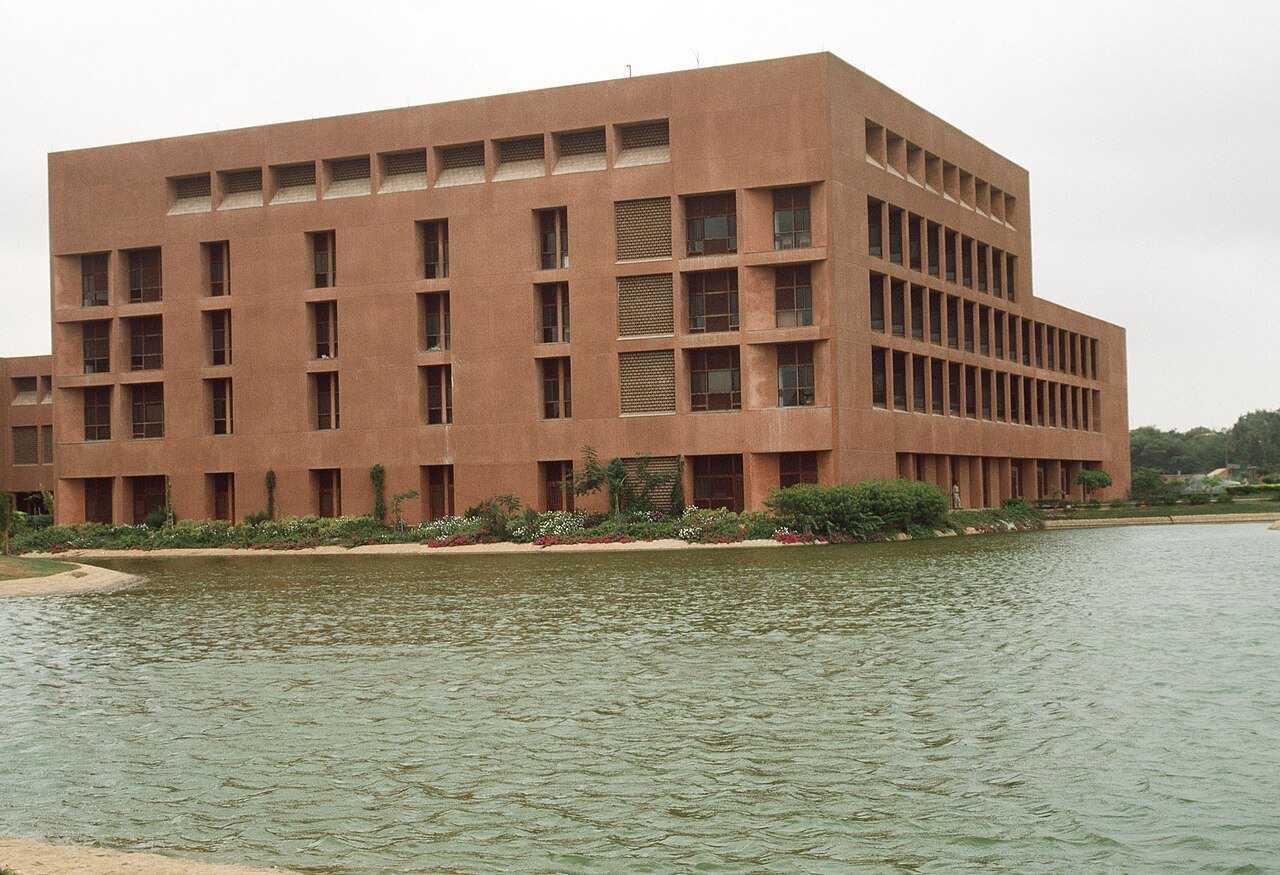
Aga Khan University has announced a likely transition to administering the University Clinical Aptitude Test (UCAT) for eligible MBBS candidates starting from the 2027 admission cycle. This definitive master guide deconstructs the four active UCAT subtests following the 2025 removal of Abstract Reasoning, details Pearson VUE registration across test centers in Karachi, Lahore, and Islamabad, breaks down the £115 fee and mandatory passport requirement, provides a dual preparation timetable balancing PMDC MDCAT curriculum memorization with UCAT cognitive pacing, and outlines the Stage 2 extracurricular portfolio and interview selection architecture.
1. The Historic Transition: Why Aga Khan University Is Adopting UCAT
Aga Khan University (AKU) is modernizing its medical admissions pipeline by phasing out its decades-old internal entrance test and moving toward the internationally standardized University Clinical Aptitude Test (UCAT) starting from the 2027 cycle. While candidates must still satisfy mandatory Pakistan Medical and Dental Council (PMDC) MDCAT criteria, the UCAT will serve as the primary cognitive benchmark for shortlisting applicants to Stage 2.
- Objective Cognitive Benchmarking: Moving to a globally standardized computerized examination eliminates testing variance and aligns AKU with premier international medical faculties across the United Kingdom, Australia, and New Zealand.
- Separation of Aptitude From Rote Recall: While provincial boards reward verbatim textbook memorization, the UCAT tests raw critical thinking, cognitive agility, logic puzzles, arithmetic speed, and professional ethics under extreme time pressure.
- Universal Standard for Diverse Cohorts: AKU evaluates candidates from FSc Pre-Medical, Cambridge A-Levels, International Baccalaureate (IB), and American High School Diplomas. The UCAT establishes a level playing field independent of secondary curriculum origin.
| Admission Parameter | Legacy AKU Entrance Test (Pre-2027) | Modernized UCAT Framework (2027+) |
|---|---|---|
| Testing Modality | Paper-based institutional exam | Computer-based Pearson VUE proctored exam |
| Tested Domains | Science (Biology/Chemistry) + Mathematical & Reasoning | Verbal Reasoning, Decision Making, Quantitative Reasoning, SJT |
| Abstract Reasoning Subtest | Evaluated pattern recognition | Permanently removed from standard UCAT format |
| Scoring Scale | Internal raw percentage score | 300 to 900 points per cognitive subtest (1200 to 3600 total) + SJT Bands 1-4 |
| Testing Centers | Limited major cities in Pakistan | Global Pearson VUE network (Karachi, Lahore, Islamabad) |
| Negative Marking | Variable depending on test section | Strictly zero negative marking across all subtests |
Candidates must note that adopting the UCAT does not exempt applicants from PMDC regulatory mandates. All candidates admitted to Pakistani medical colleges must achieve the minimum passing benchmark on the national PMDC MDCAT (55% for MBBS) to secure their official registration. The UCAT operates as AKU's proprietary shortlisting filter before the Stage 2 interview round.
2. UCAT Test Architecture Deconstructed: The Four Active Subtests
The modern UCAT consists of four separately timed, sequential computer-delivered subtests comprising 184 multiple-choice questions within 111 minutes of actual testing time, plus 6 minutes and 30 seconds of instruction intervals. Candidates cannot pause the clock once a section initiates, and unused time within one subtest does not carry forward to subsequent modules.
| Subtest Module | Questions | Duration | Target Pace | Cognitive Domain |
|---|---|---|---|---|
| Verbal Reasoning | 44 Questions | 22 Minutes | ~30s per question | Critical evaluation of written passages |
| Decision Making | 35 Questions | 37 Minutes | ~63s per question | Logic puzzles, syllogisms, probability |
| Quantitative Reasoning | 36 Questions | 26 Minutes | ~43s per question | Data interpretation, numerical problem solving |
| Situational Judgement | 69 Questions | 26 Minutes | ~22s per question | Medical ethics, patient safety, integrity |
| Full Examination | 184 Questions | 111 Minutes | High Velocity | Complete UCAT Testing Battery |
Verbal Reasoning (44 Questions | 22 Minutes)
Verbal Reasoning evaluates critical evaluation of written prose. The subtest presents 11 complex passages, each followed by 4 questions, demanding rapid reading speed and logical deduction without external assumptions.
- Question Typology: True/False/Cannot Tell assertions and conclusion inferences.
- Pacing Standard: Exactly 2 minutes per passage, leaving 30 seconds per question.
Decision Making (35 Questions | 37 Minutes)
Decision Making assesses your capacity to navigate complex scenarios, evaluate statistical arguments, and solve deductive puzzles under uncertainty.
- Question Typology: Logical puzzles, syllogisms with binary Yes/No statements, Venn diagram interpretations, probabilistic decisions, and argument evaluation.
- Pacing Standard: Approximately 63 seconds per problem.
Quantitative Reasoning (36 Questions | 26 Minutes)
Quantitative Reasoning evaluates numerical problem-solving and statistical interpretation using tables, geometric charts, and real-world clinical or financial data.
- Question Typology: Proportional scaling, percentage changes, rate-of-work calculations, currency conversions, and geometric areas.
- Calculator Interface: Access to a basic on-screen pop-up calculator with numeric keypad shortcuts (
NumLockenabled,Enterfor equals,Backspacefor clear). - Pacing Standard: Approximately 43 seconds per calculation.
Situational Judgement (69 Questions | 26 Minutes)
Situational Judgement measures professional integrity, clinical empathy, patient autonomy, team communication, and medical ethics across 22 authentic clinical and academic scenarios.
- Scoring System: Unlike cognitive subtests scored from 300 to 900, Situational Judgement is categorized into Bands: Band 1 (Exceptional), Band 2 (Good), Band 3 (Modest), and Band 4 (Unsatisfactory).
- Pacing Standard: Approximately 22 seconds per item.
In Quantitative Reasoning, opening the on-screen calculator for every step is a guaranteed timing failure. Apply round-number estimation: if finding 14.8% of 5,920, calculate 15% of 6,000 (which is 900) and scan the answer options. If only one choice resides between 860 and 890, select it immediately and proceed without touching the numeric keypad.
In Verbal Reasoning, candidates frequently fail questions by importing outside factual knowledge. If a passage discusses tuberculosis treatment protocols and makes an incomplete medical statement, your answer must reflect strictly what the passage author asserts. Choosing an option because it is medically accurate in real life, when the passage states otherwise or omits it, triggers an immediate distractor failure.
3. Pearson VUE Registration in Pakistan: Test Centers, Fees, and Identification Rules
Pearson VUE delivers the computer-based UCAT across authorized professional test centers located in Karachi, Lahore, and Islamabad. Seats are strictly allocated on a first-come, first-served reservation model via the official UCAT Consortium booking system (ucat.ac.uk).
- Official Testing Window: The examination runs annually between July and late September. Candidates can sit the UCAT only once per testing cycle.
- International Examination Fee: Candidates testing outside the United Kingdom pay an international testing fee of £115 (approximately PKR 41,000 to PKR 44,000 depending on prevailing bank exchange rates and foreign transaction levies).
- Mandatory Identification Document: Pearson VUE test centers in Pakistan strictly enforce international testing protocols. Every candidate must present a valid, original, unexpired physical Passport. Pakistani National Identity Cards (Smart CNIC), B-Forms, college identity cards, and photocopies are strictly rejected, resulting in forfeiture of testing fees.
| Step | Action Item | Protocol Requirement |
|---|---|---|
| Step 1 | Portal Account Creation | Register an official candidate account at ucat.ac.uk between May and June |
| Step 2 | Identity Verification | Ensure legal name strictly matches physical Passport bio-data page |
| Step 3 | Test Center Selection | Select Pearson VUE facility in Karachi, Lahore, or Islamabad |
| Step 4 | Fee Remittance | Remit £115 international fee via international payment card |
| Step 5 | Test Day Reporting | Report 30 minutes prior to slot with original physical Passport |
4. Dual Preparation Architecture: Balancing PMDC MDCAT With UCAT Cognitive Speed
Pre-med students in Pakistan cannot afford to sacrifice their PMDC MDCAT preparation while preparing for the UCAT. Because public medical college admissions and PMDC licensing require competitive MDCAT aggregates, top applicants must execute an integrated 90-day dual preparation architecture.
- Morning Focus (MDCAT Syllabus Anchoring): Allocate 3 to 4 morning hours to textbook active recall, high-yield cloze flashcards, and provincial syllabus discrepancy mapping across Biology, Chemistry, and Physics.
- Midday Focus (Cognitive Pacing & Puzzles): Dedicate 90 minutes to non-curricular UCAT training, including speed-reading scientific articles, solving Decision Making syllogisms, and practicing mental arithmetic.
- Evening Focus (Timed Subtest Simulations): Complete one full 25-minute timed UCAT subtest on alternate evenings, followed by an exhaustive review of every flagged error inside your Mistake Register.
| Day | MDCAT Focus Domain | UCAT Speed Module | Target Review |
|---|---|---|---|
| Monday | MDCAT Biology (Cell Signaling) | 22-min UCAT Verbal Reasoning Set | Passage inference analysis |
| Tuesday | MDCAT Chemistry (Carbonyl Reactions) | 37-min UCAT Decision Making Set | Syllogism validity rules |
| Wednesday | MDCAT Physics (Rotational Dynamics) | 26-min UCAT Quantitative Set | Rapid mental math heuristics |
| Thursday | MDCAT Biology (Genetics & Pedigrees) | 26-min UCAT Situational Judgement Set | GMC & PMDC ethical codes |
| Friday | Dual Error Consolidation | Mistake Register Cross-Audit | Deep root-cause dissection |
| Saturday | Full Diagnostic Simulator | Complete Timed 111-min Mock | Pacing and stamina calibration |
| Sunday | Spaced Retrieval Catch-Up | BeambePrep Flashcard Review Queue | Weak retention recovery |
Use spaced repetition flashcards for your Decision Making syllogism rules and Situational Judgement professional guidelines (e.g. GMC Duties of a Doctor / PMDC Code of Ethics). Memorizing deductive validity rules (Contrapositive: If P implies Q, then Not Q implies Not P) converts a 90-second logic puzzle into a 15-second deterministic deduction.
5. AKU Stage 2 Mastery: Extracurricular Portfolios (ECAs) and MMI Interview Selection
Securing a top-percentile score on the UCAT qualifies a candidate for shortlisting, but final admission to Aga Khan University is decided in Stage 2. Candidates submit Application Form II (the comprehensive extracurricular portfolio) and complete two independent, rigorous 30-minute interviews.
Deciphering Application Form II (The ECA Portfolio)
Aga Khan University evaluates whether an applicant embodies the humanistic values, intellectual curiosity, resilience, and ethical compass required of future healthcare leaders. Quality and reflective depth consistently outweigh laundry lists of superficial certificates.
- Clinical Exposure & Hospital Volunteering: Observerships or service hours in hospital wards, intensive care units, emergency departments, or rural clinics demonstrating firsthand exposure to healthcare environments.
- Community Service & Civic Responsibility: Sustained voluntary service at blood banks, educational foundations, disaster relief drives, or non-profit welfare trusts.
- Intellectual & Creative Distinctions: Participation in scientific research projects, writing publications, competitive debating, Model United Nations, or science olympiads.
- Teamwork, Sports, and Physical Stamina: Participation in competitive athletics, leadership roles in student councils, or musical accomplishments reflecting discipline and balance.
The Two Independent 30-Minute Stage 2 Interviews
Shortlisted applicants participate in two independent 30-minute interviews conducted by senior clinicians, medical educators, and faculty members. The interviews assess non-academic competencies through conversational, situational, and ethical exploration.
- Ethical Dilemmas & Decision Making: Candidates are presented with complex healthcare challenges, such as handling a medication error, respecting a patient's refusal of life-saving care, or distributing limited medical resources.
- Motivation for Clinical Medicine: Probing beyond cliche answers like "I want to help people" to explore specific experiences that shaped your dedication to clinical service.
- Emotional Resilience & Coping Mechanics: Examining how you navigate failure, academic pressure, emotional loss, and interpersonal conflict.
In AKU Stage 2 interviews, evaluation panels test your grasp of the four foundational pillars of biomedical ethics: Autonomy (respecting the patient's right to choose), Beneficence (acting in the patient's best interest), Non-Maleficence (first, do no harm), and Justice (fair distribution of care). When responding to clinical scenarios, structure your reasoning across these four principles to demonstrate mature professional thinking.
Frequently Asked Questions
Q: Will the UCAT completely replace the PMDC MDCAT for Aga Khan University?
No. Under PMDC regulations, every candidate admitted to an MBBS programme in Pakistan must sit for and pass the national MDCAT examination with the mandated minimum percentage. The UCAT serves as AKU's proprietary institutional assessment to shortlist candidates for Stage 2 interviews.
Q: What is considered a competitive UCAT score for AKU MBBS shortlisting?
While official cutoffs vary each cycle based on applicant performance, competitive candidates for elite medical programs generally achieve overall cognitive scores above 2,700 to 2,850 (averaging 680 to 710 per subtest) along with a Situational Judgement result of Band 1 or Band 2.
Q: Can I sit for the UCAT in Pakistan using my Smart National Identity Card (CNIC)?
No. Pearson VUE test centers in Pakistan strictly mandate a valid, original physical passport as identification for international examinations. Candidates presenting a CNIC, B-Form, or student identity card are turned away without testing or fee reimbursement.
Start Retaining for Real: Master AKU Is Transitioning to UCAT: The Definitive Guide for Pakistani Applicants with Active Recall
Passive reading and repetitive textbook re-reading create the dangerous illusion of mastery. Real exam excellence requires spaced retrieval and discriminating question practice that mirrors actual PMDC difficulty.