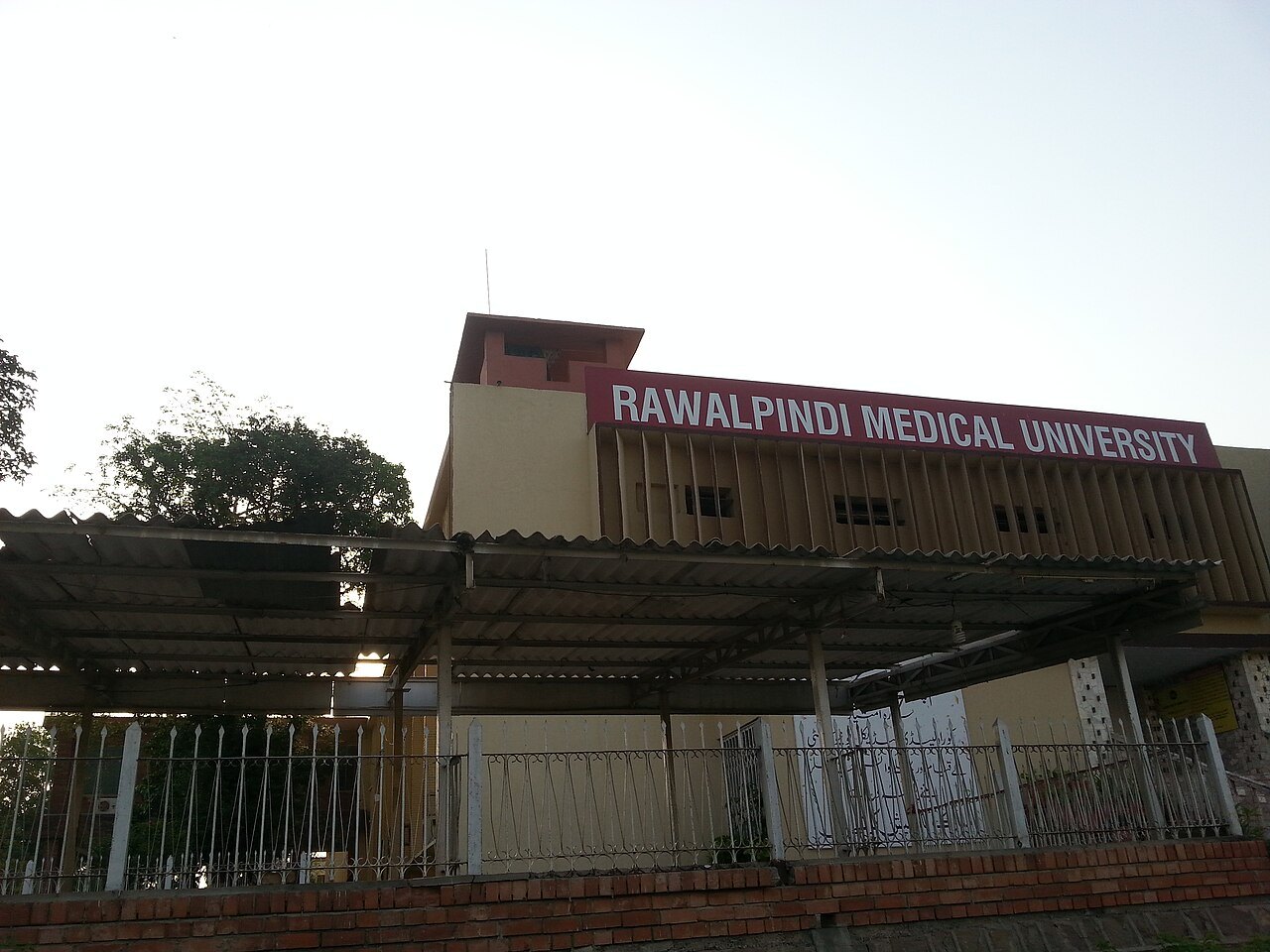
The National University of Medical Sciences (NUMS) entry test is the compulsory examination governing admissions into Pakistan's premier military medical faculty, Army Medical College (AMC) Rawalpindi, as well as all affiliated Combined Military Hospital (CMH) medical colleges across the country. This definitive master guide provides the complete breakdown of the 150-question academic battery and the psychological aptitude test, deconstructs the three cadet entry categories (Medical Cadets, Paying Cadets, and Civilian NUMS Cadets), reviews verified forensic coverage telemetry from the NUMS 2026 paper, and maps historical closing merit lists across all military medical colleges.
1. What Is the NUMS Entry Test: Governing Authority, Jurisdiction, and Purpose
The National University of Medical Sciences (NUMS) is a specialized federal public healthcare university established under an Act of Parliament to regulate medical and military healthcare education. The NUMS entry test is an independent standardized entrance examination conducted annually across nationwide and international testing centers to evaluate candidates seeking admission to Army Medical College (AMC) Rawalpindi and its countrywide network of affiliated private military medical institutions.
- Independent Testing Mandate: While public provincial medical colleges require the PMDC MDCAT, admission to Army Medical College and affiliated CMH colleges requires sitting for the NUMS entry test. Candidates aspiring to military medical careers typically appear for both examinations.
- Academic Eligibility Threshold: Applicants must have passed their Higher Secondary School Certificate (HSSC Pre-Medical) or equivalent qualification (such as Cambridge A-Levels with IBCC equivalence) with a minimum of 60% aggregate marks.
- The Two-Tier Testing Architecture: The examination comprises two distinct consecutive papers administered on the same morning: Part A (the academic subject assessment) and Part B (the psychological aptitude test).
| Examination Dimension | Part A: Academic Subject Test | Part B: Psychological Aptitude Test |
|---|---|---|
| Questions Count | 150 Multiple Choice Questions | 50 to 100 Situational & Personality Items |
| Time Allocation | 150 Minutes (~60 seconds per question) | 30 Minutes |
| Tested Domains | Biology (35%), Chemistry (25%), Physics (25%), English (15%) | Integrity, emotional stability, leadership, military resilience |
| Scoring Mechanics | +1 mark per correct answer; zero negative marking | Evaluated on psychological suitability scale |
| Aggregate Contribution | Drives 100% of academic entrance test weightage | Mandatory qualifying clearance; protects officer profile |
Candidates must note that unlike provincial MDCAT examinations that lean heavily on regional provincial textbooks, NUMS papers are developed at the federal level by military and civilian faculty. The NUMS curriculum aligns most closely with the Federal National Book Foundation (NBF / FBISE) and Punjab Textbook Board (PTB), with a notable emphasis on clean conceptual physics, anatomical terminology, and non-ambiguous chemical reactions.
2. Army Medical College (AMC) Admission Pathways: MC, PC, and NUMS Cadets
Admission to Army Medical College Rawalpindi is highly coveted due to its clinical prestige, zero tuition costs for select categories, and guaranteed officer commissions. Candidates enter AMC through three distinct, non-overlapping administrative pathways.
| Cadre Category | Candidate Classification | Tuition & Financial Model | Post-Graduation Commission |
|---|---|---|---|
| Medical Cadets (MC) | Selected via AS&RC & GHQ Board | 100% Free Tuition + Monthly Cadet Stipend | Immediate Captain Commission in AMC (13-Year Bond) |
| Paying Cadets (PC) | Wards of Military Armed Personnel | Highly Subsidized Institutional Tuition | Civilian or Military Commission Eligibility |
| NUMS Cadets (Open Merit) | Pure Civilian Applicants | Standard NUMS University Tuition Fees | Independent Civilian Medical Practitioner |
Stream 1: Medical Cadets (MC)
Medical Cadets are inducted directly into the Pakistan Army through Army Selection and Recruitment Centers (AS&RC).
- Selection Process: Preliminary intelligence and academic test, physical fitness evaluation (1.6 km run, pull-ups, push-ups, sit-ups, ditch jumping), medical screening, GHQ selection board interview, and final approval by the General Headquarters.
- Financial & Career Benefits: 100% free medical education at AMC Rawalpindi, free hostel accommodation, a monthly cadet stipend throughout the five-year MBBS program, and an immediate commission as a Captain in the Army Medical Corps (AMC) upon graduation.
- Military Bond Commitment: Candidates sign a mandatory service bond pledging to serve in the Pakistan Army for a minimum of 13 years following house job completion.
Stream 2: Paying Cadets (PC)
Paying Cadets are children of serving, retired, or deceased Pakistan Armed Forces personnel (Army, Navy, and Air Force).
- Selection Process: Candidates must sit for the NUMS entry test and apply through the Military Personnel Services Directorate (GHQ) or respective service headquarters.
- Tuition Structure: Subsidized tuition fees significantly lower than civilian private college tariffs, determined by the parent's military rank and service record.
Stream 3: NUMS Cadets (Civilian Open Merit)
Civilian candidates with no military background compete for open-merit civilian seats at Army Medical College.
- Selection Process: Based strictly on composite academic merit calculated from Matric, FSc, and the NUMS entry test.
- Tuition Structure: Standard public university medical tuition fees set by NUMS, with no military service obligation upon graduation.
Civilian applicants frequently confuse the Medical Cadet (MC) stream with the NUMS Cadet open-merit stream. Sitting for the NUMS entry test alone does NOT register you as a Medical Cadet. If you wish to join the Army as an officer cadet with a stipend, you must independently apply through the official Join Pakistan Army portal when Medical Cadet registrations open in June/July.
3. Verified Forensic Telemetry: 89.6% Science Coverage in the NUMS 2026 Paper
Following the conduct of the NUMS 2026 examination, BeambePrep conducted an open, question-by-question forensic audit of all 135 science questions against its 9,763 public Anki flashcards library. The verified findings demonstrated the power of spaced retrieval for medical entrance preparation.
| Subject Area | Total MCQs | Direct Hits | Conceptual Hits | Total Verified Matches | Coverage Percentage | True Coverage Gaps |
|---|---|---|---|---|---|---|
| Physics | 40 | 21 (52.5%) | 18 (45.0%) | 39 | 97.5% | 1 (2.5%) |
| Biology | 55 | 35 (63.6%) | 14 (25.5%) | 49 | 89.1% | 6 (10.9%) |
| Chemistry | 40 | 23 (57.5%) | 10 (25.0%) | 33 | 82.5% | 7 (17.5%) |
| Total Science Aggregation | 135 | 79 (58.5%) | 42 (31.1%) | 121 | 89.6% | 14 (10.4%) |
- Physics Mastery (97.5% Coverage): Physics was the primary rank decider. BeambePrep flashcards matched 39 out of 40 questions, answering concepts such as banked road curves ($v = \sqrt{rg\tan\theta}$), wave intensity scaling ($I \propto A^2$), and full-wave bridge rectifier diode counts directly.
- Radical Transparency on Coverage Gaps: Operating under strict scientific honesty, exactly 14 true coverage gaps were cataloged during the audit, and all 14 concepts were synthesized into the deck library within 48 hours to ensure zero curriculum voids for future candidates.
In NUMS Physics thermodynamic questions regarding adiabatic processes, remember that an adiabatic expansion always does work at the expense of internal energy ($\Delta U = -W$), causing temperature to drop. In adiabatic compression, work done on the gas increases internal energy, causing temperature to rise. If a question states that an insulated gas is compressed rapidly, eliminate all options suggesting constant or lower temperatures instantly.
4. Deconstructing Part B: The Psychological Aptitude Assessment
Part B of the NUMS entry test evaluates your psychological profile, personal integrity, social adaptability, and stress tolerance. It consists of multiple-choice personality and situational items to be answered within 30 minutes.
- Consistency Detection: The test contains subtle cross-check items that ask the same behavioral question in reverse phrasing 30 questions later. Trying to craft a fake persona results in contradictory answers that flag the profile.
- Core Psychological Pillars Tested:
- Integrity & Honesty: How you react when discovering an unearned advantage or a colleague's mistake.
- Emotional Stability: Your capacity to remain calm under verbal criticism, tight deadlines, or unexpected loss.
- Team Collaboration: Willingness to prioritize collective mission success over individual glory.
- Authoritative Respect & Adaptability: Respect for clinical and administrative command structures.
In psychological testing, avoid extreme absolute options ("Always", "Never") on ambiguous social scenarios unless the question involves an absolute moral imperative (e.g. "I have never told a lie in my life" is a classic lie-scale trap; humans occasionally tell white lies, and answering 'strongly agree' flags dishonesty).
5. Historical Closing Merit Trends Across NUMS Colleges
Merit for civilian open-merit seats across NUMS colleges follows a steep gradient, with Army Medical College requiring elite scores and affiliated CMH institutions offering viable options across broader aggregate ranges.
| Medical College | Affiliation Status | Location | Typical Closing Merit Range |
|---|---|---|---|
| Army Medical College (AMC) | Public Federal Military College | Rawalpindi | 92.8% to 94.2% (Open Merit Civilian) |
| CMH Lahore Medical College | Private Affiliated Military Institute | Lahore | 87.5% to 89.2% |
| CMH Multan Institute of Medical Sciences | Private Affiliated Military Institute | Multan | 83.5% to 85.5% |
| HITEC Institute of Medical Sciences | Private Affiliated Military Institute | Taxila | 82.0% to 84.5% |
| CMH Kharian Medical College | Private Affiliated Military Institute | Kharian | 81.5% to 83.8% |
| Quetta Institute of Medical Sciences (QIMS) | Semi-Private Military Institute | Quetta | 79.0% to 82.5% |
Graduating from Army Medical College or a CMH institution provides exposure to tertiary military hospitals, such as Combined Military Hospital (CMH) and Military Hospital (MH) Rawalpindi. These hospitals maintain patient volumes exceeding thousands of admissions weekly, exposing house officers and postgraduates to advanced trauma management, field medicine, and high-complexity surgical subspecialties.
Frequently Asked Questions
Q: Can a candidate use their NUMS Entry Test score to apply to public provincial medical colleges like King Edward or Dow?
No. The NUMS entry test is valid strictly for admissions into Army Medical College Rawalpindi and NUMS-affiliated military medical colleges (such as CMH Lahore, CMH Multan, and HITEC Taxila). For provincial public medical colleges, you must appear in the PMDC MDCAT.
Q: Is physical testing required for civilian NUMS Cadet applicants?
No. Physical endurance tests (running, push-ups, pull-ups) and the ISSB selection board are mandatory strictly for candidates applying for the Medical Cadet (MC) stream to receive military commissions. Civilian open-merit NUMS applicants are selected purely on academic aggregate.
Q: Does NUMS deduct marks for incorrect answers in the entry test?
No. There is zero negative marking on the NUMS entry test. Candidates should attempt every single multiple-choice question on their answer sheet.
Start Retaining for Real: Master NUMS Entry Test & Army Medical College Complete Master Guide with Active Recall
Passive reading and repetitive textbook re-reading create the dangerous illusion of mastery. Real exam excellence requires spaced retrieval and discriminating question practice that mirrors actual PMDC difficulty.