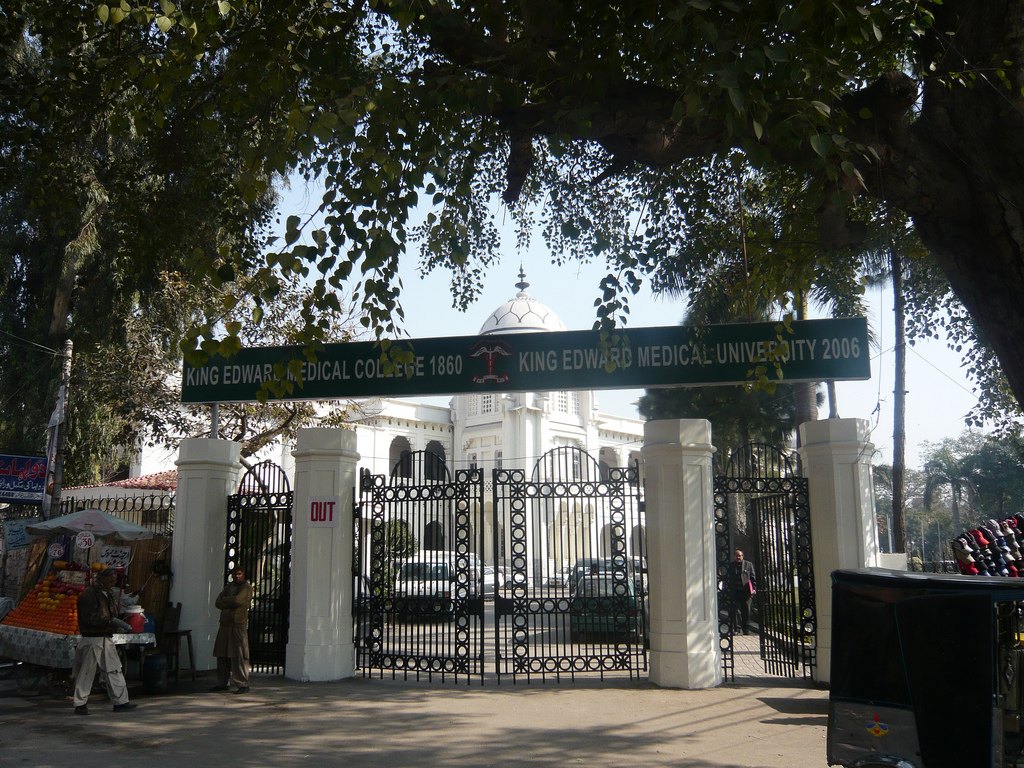
Securing an open-merit public MBBS or BDS seat in Pakistan requires an exact mathematical understanding of provincial closing merits, quota allocations, and the official PMDC 10:40:50 aggregate formula. With closing merit thresholds exceeding 93.8% at King Edward Medical University (KEMU), 93.1% at Allama Iqbal Medical College (AIMC), 88.5% at Dow Medical College (DMC/DUHS), and 89.2% at Khyber Medical College (KMC/KMU), admission is decided by fractions of a percent. This master guide delivers the definitive historical closing merit archive across all public medical colleges in Punjab, Sindh, Khyber Pakhtunkhwa, Federal/ICT, and Balochistan, breaks down seat quotas and reciprocal allocations, details sensitivity models down to four decimal places, and provides inverse target formulas showing the exact raw MDCAT marks you need based on your FSc score. Calculate your standing instantly with our UHS Punjab Merit Calculator, DUHS Sindh Merit Calculator, KMU KPK Merit Calculator, SZABMU Federal Merit Calculator, and Army Medical College (AMC) Merit Calculator.
1. The Anatomy of Medical College Merit: The PMDC Statutory 10:40:50 Formula
Under the statutory regulations of the Pakistan Medical and Dental Council (PMDC), undergraduate admissions into public and private medical (MBBS) and dental (BDS) institutions across Pakistan are determined strictly by a standardized composite merit formula. School grading variances, regional board inflations, and raw test marks are unified into a single percentage scaled to four decimal places.
The Statutory PMDC Composite Formula
$$\text{Merit Aggregate } (\%) = \left(\frac{\text{Matric Marks}}{\text{Matric Total}} \times 10\right) + \left(\frac{\text{HSSC Marks}}{\text{HSSC Total}} \times 40\right) + \left(\frac{\text{MDCAT Marks}}{\text{MDCAT Total}} \times 50\right)$$
| Statutory Component | Percentage Weighting | Standard Benchmark Total | Mathematical Leverage per Mark |
|---|---|---|---|
| MDCAT Entrance Examination | 50% | 180 Marks (National Entrance Test) | $\Delta = +0.2778\%$ per raw mark |
| HSSC Intermediate Pre-Medical | 40% | 1100 Marks (FSc / HSSC Equivalence) | $\Delta = +0.0364\%$ per raw mark |
| SSC Secondary School | 10% | 1100 Marks (Matriculation / O-Level) | $\Delta = +0.0091\%$ per raw mark |
Mathematical Sensitivity Analysis: The Power of 1 MDCAT Mark
To understand where your preparation hours yield the highest mathematical return, examine the exact percentage contribution of a single raw mark earned across each academic tier (with standard totals of 1100 for Matric, 1100 for HSSC, and 180 for MDCAT):
$$\Delta_{\text{Matric}} = \frac{1}{1100} \times 10 = 0.00909\% \text{ per mark}$$
$$\Delta_{\text{HSSC}} = \frac{1}{1100} \times 40 = 0.03636\% \text{ per mark}$$
$$\Delta_{\text{MDCAT}} = \frac{1}{180} \times 50 = 0.27778\% \text{ per mark}$$
The mathematical relationships demonstrate the decisive leverage of the entrance examination:
$$\frac{\Delta_{\text{MDCAT}}}{\Delta_{\text{HSSC}}} = \frac{0.27778}{0.03636} \approx 7.6389$$
$$\frac{\Delta_{\text{MDCAT}}}{\Delta_{\text{Matric}}} = \frac{0.27778}{0.00909} \approx 30.5556$$
A single raw mark on the 180-question MDCAT paper contributes 7.64 times more to your composite aggregate than a mark in FSc Pre-Medical, and 30.56 times more than a mark in Matriculation. In provincial cohorts where hundreds of applicants are separated by fractions of a percent, a three-mark increase on the MDCAT shifts your aggregate by +0.8333%, moving your application ahead of 300 to 500 competing candidates.
While the PMDC mandates the unified 10:40:50 formula, the legal execution of admissions is managed independently by designated provincial admitting universities: University of Health Sciences (UHS) in Punjab, Dow University of Health Sciences (DUHS) in Sindh, Khyber Medical University (KMU) in KPK, Shaheed Zulfiqar Ali Bhutto Medical University (SZABMU) in Islamabad, and Bolan University of Medical and Health Sciences (BUMHS) in Balochistan. Each admitting university publishes independent merit lists based strictly on provincial domiciles. You cannot use a Punjab domicile to claim an open-merit seat in Sindh or KPK, regardless of your aggregate percentage.
2. Punjab Medical Colleges (UHS Lahore): Closing Merit Hierarchy and Seat Distribution
Punjab possesses the largest medical education infrastructure in Pakistan, admitting over 3,400 open-merit MBBS students across 16 public medical colleges and 3 public dental colleges administered by the University of Health Sciences (UHS), Lahore.
| Admissions Tier | Typical Aggregate Range | Member Medical Colleges | Admitting Teaching Hospital |
|---|---|---|---|
| Tier 1: Elite Metro Flagships | 92.4% to 94.2%+ | King Edward Medical University (KEMU), Allama Iqbal Medical College (AIMC), Services Institute of Medical Sciences (SIMS), Ameer-ud-Din Medical College (AMC) | Mayo Hospital, Jinnah Hospital, Services Hospital, Lahore General Hospital |
| Tier 2: Urban Central Hubs | 91.0% to 92.2% | Fatima Jinnah Medical University (FJMU), Rawalpindi Medical University (RMU), Nishtar Medical University (NMU), Faisalabad Medical University (FMU) | Sir Ganga Ram Hospital, Holy Family Hospital, Nishtar Hospital, Allied Hospital |
| Tier 3: Regional & Peripheral Colleges | 90.45% to 90.9% | Quaid-e-Azam Medical College (QAMC), Gujranwala Medical College (GMC), Sahiwal Medical College (SLMC), D.G. Khan Medical College (DGMC) | Bahawal Victoria Hospital, DHQ Teaching Hospital Gujranwala, Sahiwal Teaching Hospital, Teaching Hospital D.G. Khan |
Complete Punjab Public Medical College Closing Merit Archive
Below is the definitive closing merit hierarchy across all public medical colleges in Punjab over recent admission cycles:
| Medical College | Location | Typical Open Merit Closing Range | Total Open Merit Seats | Primary Teaching Hospital |
|---|---|---|---|---|
| King Edward Medical University (KEMU) | Lahore | 93.8500% to 94.2500% | ~300 Seats | Mayo Hospital Lahore (2,300+ Beds) |
| Allama Iqbal Medical College (AIMC) | Lahore | 93.1000% to 93.4500% | ~300 Seats | Jinnah Hospital Lahore (1,500+ Beds) |
| Services Institute of Medical Sciences (SIMS) | Lahore | 92.4500% to 92.8000% | ~200 Seats | Services Hospital Lahore (1,400+ Beds) |
| Ameer-ud-Din Medical College (AMC / PGMI) | Lahore | 92.0500% to 92.3500% | ~100 Seats | Lahore General Hospital (1,000+ Beds) |
| Fatima Jinnah Medical University (FJMU) | Lahore (Female) | 91.8000% to 92.1500% | ~250 Seats | Sir Ganga Ram Hospital (1,000+ Beds) |
| Rawalpindi Medical University (RMU) | Rawalpindi | 91.5000% to 91.8500% | ~300 Seats | Holy Family, Benazir Bhutto & DHQ (2,000+ Beds) |
| Nishtar Medical University (NMU) | Multan | 91.2000% to 91.5500% | ~280 Seats | Nishtar Hospital Multan (1,800+ Beds) |
| Faisalabad Medical University (FMU / PMC) | Faisalabad | 91.0000% to 91.3500% | ~300 Seats | Allied Hospital & DHQ Faisalabad (1,500+ Beds) |
| Quaid-e-Azam Medical College (QAMC) | Bahawalpur | 90.8000% to 91.1000% | ~275 Seats | Bahawal Victoria Hospital (1,500+ Beds) |
| Gujranwala Medical College (GMC) | Gujranwala | 90.7000% to 90.9500% | ~100 Seats | DHQ Teaching Hospital Gujranwala (600+ Beds) |
| Sahiwal Medical College (SLMC) | Sahiwal | 90.6000% to 90.8500% | ~100 Seats | DHQ Teaching Hospital Sahiwal (600+ Beds) |
| Sargodha Medical College (SMC) | Sargodha | 90.5800% to 90.8000% | ~100 Seats | DHQ Teaching Hospital Sargodha (600+ Beds) |
| Nawaz Sharif Medical College (NSMC) | Gujrat | 90.5200% to 90.7500% | ~100 Seats | Aziz Bhatti Shaheed Hospital (500+ Beds) |
| Sheikh Zayed Medical College (SZMC) | Rahim Yar Khan | 90.4800% to 90.7000% | ~150 Seats | Sheikh Zayed Hospital RYK (1,000+ Beds) |
| D.G. Khan Medical College (DGMC) | Dera Ghazi Khan | 90.4200% to 90.6500% | ~100 Seats | DHQ Teaching Hospital DG Khan (500+ Beds) |
| Punjab Open Merit MBBS Cutoff Floor | Provincial Base | 90.4200% to 90.6500% | ~3,000+ Open | Lowest Admitted Open-Merit MBBS Rank |
| de'Montmorency College of Dentistry | Lahore | 89.5000% to 90.2000% | ~90 Seats | Punjab Dental Hospital Lahore |
| Nishtar Institute of Dentistry (NID) | Multan | 88.8500% to 89.4000% | ~50 Seats | Nishtar Dental Clinics Multan |
| Dental Section FMU | Faisalabad | 88.6000% to 89.1500% | ~50 Seats | Allied Hospital Dental Clinics |
| Punjab Open Merit BDS Cutoff Floor | Provincial Base | 88.6000% to 89.1500% | ~190 Open | Lowest Admitted Open-Merit BDS Rank |
A frequent mistake made by candidates during online preference submission is the "Premature Freezing Error". When UHS publishes the first provisional merit list, a candidate who is allocated their 8th preference (such as Gujranwala Medical College) must pay the mandatory admission fee at the allocated college to protect their seat. If they click "Freeze", their admission is permanently locked at GMC, completely preventing automatic upward migration to Rawalpindi Medical University or SIMS in subsequent merit lists. Unless an allocated college was your absolute first choice, pay the fee and leave the portal unfrozen to allow upward merit migration.
3. Sindh Medical Colleges (DUHS Karachi): Urban vs Rural Quotas and Regional Distribution
In Sindh, medical admissions administered by Dow University of Health Sciences (DUHS) follow a dual-track quota system mandated by provincial law: seats are divided between Karachi Urban candidates and Sindh Rural district candidates.
| Domicile Pool | Exemplar Medical Colleges | Typical Closing Aggregate Range | Clinical Hospital Base |
|---|---|---|---|
| Karachi Urban Domicile Pool | Dow Medical College (DMC), Jinnah Sindh Medical University (JSMU), Shaheed Mohtarma Benazir Bhutto Medical College (SMBBMC Lyari), DIKIOHS Dental | 86.0% to 90.2%+ | Civil Hospital Karachi, Jinnah Postgraduate Medical Centre (JPMC), Lyari General Hospital |
| Sindh Rural District Domicile Pool | Liaquat University of Medical & Health Sciences (LUMHS), Chandka Medical College (SMBBMU Larkana), Peoples University (PUMHSW Shaheed Benazirabad), Gambat Medical College | 81.0% to 86.8% | Liaquat University Hospital Hyderabad/Jamshoro, CMC Hospital Larkana, Peoples Medical Hospital Nawabshah |
Sindh Public Medical College Closing Merit Archive
| Medical College | Jurisdiction / Category | Location | Typical Closing Merit Range | Primary Teaching Hospital |
|---|---|---|---|---|
| Dow Medical College (DMC / DUHS) | Karachi Urban Pool | Karachi | 88.5000% to 90.2500% | Civil Hospital Karachi (2,000+ Beds) |
| Jinnah Sindh Medical University (SMC / JSMU) | Karachi Urban Pool | Karachi | 87.2000% to 88.5000% | Jinnah Postgraduate Medical Centre (JPMC) |
| Shaheed Mohtarma Benazir Bhutto (SMBBMC) | Karachi Urban Pool | Lyari, Karachi | 86.0000% to 87.2000% | Lyari General Hospital (500+ Beds) |
| Liaquat University of Med & Health (LUMHS) | Rural District Pool | Jamshoro | 83.5000% to 86.8000% | LUMHS Teaching Hospital Hyderabad/Jamshoro |
| SMBBMU (Chandka Medical College) | Rural District Pool | Larkana | 82.0000% to 85.0000% | Chandka Medical College Hospital (1,200+ Beds) |
| Peoples University of Med & Health (PUMHSW) | Rural Female Pool | Nawabshah | 81.5000% to 84.5000% | PMCH Nawabshah (800+ Beds) |
| Gambat Medical College (GIMS) | Rural District Pool | Gambat | 81.0000% to 83.5000% | Gambat Institute of Medical Sciences |
| Bilawal Medical College (BMC) | Rural Male Pool | Jamshoro | 81.2000% to 83.8000% | Teaching Hospital Jamshoro |
| Dr. Ishrat-ul-Ebad Dental (DIKIOHS) | Karachi Urban BDS | Karachi | 85.2000% to 86.5000% | Dow University Dental Clinics |
| Sindh Institute of Oral Health (SIOHS) | Karachi Urban BDS | Karachi | 84.5000% to 85.8000% | JSMU Dental Clinics Karachi |
| LUMHS Dental Faculty | Rural District BDS | Jamshoro | 80.5000% to 83.0000% | LUMHS Dental Hospital Hyderabad |
Calculate your exact standing using our DUHS Sindh Merit Calculator.
When calculating target scores for Dow Medical College or King Edward, students often perform complex multi-step fractions on paper. Use the Direct Gap Multiplier. If your current aggregate is $89.2000\%$ and your target cutoff is $91.5000\%$, your required aggregate deficit is:
$$\Delta_{\text{Aggregate}} = 91.5000\% - 89.2000\% = 2.3000\%$$
Because each raw mark on the 180-question MDCAT provides $\frac{50}{180} = 0.2778\%$ aggregate, multiply your percentage deficit directly by $3.6$ ($\frac{180}{50} = 3.6$):
$$\text{Additional MDCAT Marks Needed} = 2.3000 \times 3.6 = 8.28 \implies \mathbf{9\text{ raw marks}}$$
You can calculate your required score jump in three seconds flat.
4. Khyber Pakhtunkhwa (KMU), Federal (SZABMU), and Balochistan (BUMHS)
The remaining three administrative jurisdictions administer regional admissions through distinct quota and district structures.
| Examining Jurisdiction | Lead Admitting Medical Colleges | Typical Closing Aggregate Range | Clinical Facility Anchor |
|---|---|---|---|
| Khyber Pakhtunkhwa (KMU) | Khyber Medical College (KMC), Ayub Medical College (AMC), Khyber Girls Medical College (KGMC) | 86.8% to 89.5%+ (Provincial Floor: 86.8%) | Khyber Teaching Hospital, Ayub Teaching Hospital Abbottabad, Hayatabad Medical Complex |
| Federal / ICT (SZABMU) | Federal Medical College (FMC / FMDC Islamabad) | 90.8% to 92.0%+ (ICT Open Merit & Provincial Quotas) | Pakistan Institute of Medical Sciences (PIMS Islamabad) |
| Balochistan (BUMHS) | Bolan Medical College (BMC Quetta), Makran Medical College, Loralai Medical College, Jhalawan Medical College | 78.0% to 81.5%+ | Sandeman Provincial Hospital Quetta, BMC Teaching Hospital |
Khyber Pakhtunkhwa Public Medical Colleges (KMU Peshawar)
Administered by Khyber Medical University, admissions in KPK include provincial open merit, backward area quotas, and merged districts (FATA) allocations:
- Khyber Medical College (KMC), Peshawar: Historical closing merit hovers between 89.2000% and 91.5000% (250 open seats; teaching hospital: Khyber Teaching Hospital KTH with 1,200+ beds).
- Ayub Medical College (AMC), Abbottabad: Closing merit between 88.5000% and 89.8000% (250 seats; teaching hospital: Ayub Teaching Hospital with 1,000+ beds).
- Khyber Girls Medical College (KGMC), Peshawar (Female): Closing merit between 88.2000% and 89.5000% (150 female seats; teaching hospital: Hayatabad Medical Complex HMC with 1,200+ beds).
- Gajju Khan Medical College (GKMC), Swabi: Closing merit between 87.2000% and 88.0000%.
- Bacha Khan Medical College (BKMC), Mardan: Closing merit between 87.5000% and 88.2000%.
- Saidu Medical College (SMC), Swat: Closing merit between 87.0000% and 87.8000%.
- Gomal Medical College (GMC), Dera Ismail Khan: Closing merit between 86.8000% and 87.4000%.
- KMU Institute of Medical Sciences (KIMS), Kohat: Closing merit between 86.9000% and 87.5000%.
- KPK Open Merit MBBS Floor: Typically closes between 86.8000% and 87.3500%.
Explore admissions metrics on our KMU KPK Merit Calculator.
Federal Capital and Territories (SZABMU Islamabad)
Shaheed Zulfiqar Ali Bhutto Medical University administers admissions for the premier federal public institution, Federal Medical and Dental College (FMDC / PIMS Islamabad):
- Federal Medical and Dental College (FMDC), Islamabad: 100 total MBBS seats distributed across statutory quotas:
Explore seat quotas with our SZABMU Federal Merit Calculator.
Balochistan Public Medical Colleges (BUMHS Quetta)
Administered by Bolan University of Medical and Health Sciences:
- Bolan Medical College (BMC), Quetta: Flagship provincial medical college with closing merits ranging between 78.0000% and 81.5000% on provincial open merit, with district-specific quotas ranging between 72.0000% and 77.0000%.
- Peripheral Colleges: Makran Medical College (Turbat), Loralai Medical College, and Jhalawan Medical College (Khuzdar).
5. Step-by-Step Inverse Target Modeling: What Raw MDCAT Score Do You Need?
Rather than guessing how your MDCAT score impacts your prospects, use inverse algebra to determine the exact raw marks required to reach your target institution.
The Inverse Target Equation
Given your target composite aggregate ($A$), your Matric percentage ($M$), and your HSSC percentage ($F$), solve for the required MDCAT percentage ($T_{\text{MDCAT}}$):
$$A = (M \times 0.10) + (F \times 0.40) + (T_{\text{MDCAT}} \times 0.50)$$
$$T_{\text{MDCAT}} \times 0.50 = A - (0.10 \times M) - (0.40 \times F)$$
$$T_{\text{MDCAT}} = \frac{A - (0.10 \times M) - (0.40 \times F)}{0.50} = 2 \times \left[A - (0.10 \times M) - (0.40 \times F)\right]$$
To convert this percentage into raw marks on the statutory 180-question paper:
$$\text{Raw Marks (out of 180)} = T_{\text{MDCAT}} \times 1.8$$
Target Modeling Matrix Across Top Public Medical Colleges
| Target Medical Institution | Target Composite Aggregate ($A$) | Candidate FSc (Out of 1100) | Candidate Matric (Out of 1100) | Fixed High School Contribution | Required MDCAT % ($T_{\text{MDCAT}}$) | Required MDCAT Raw Score (180 Paper) |
|---|---|---|---|---|---|---|
| King Edward (KEMU) | 94.0000% | 1045 (95.00%) | 1060 (96.36%) | 38.0000% + 9.6364% = 47.6364% | 92.7272% | 167 / 180 Marks |
| King Edward (KEMU) | 94.0000% | 1000 (90.91%) | 1020 (92.73%) | 36.3636% + 9.2727% = 45.6363% | 96.7274% | 175 / 180 Marks |
| Allama Iqbal (AIMC) | 93.2000% | 1025 (93.18%) | 1040 (94.55%) | 37.2727% + 9.4545% = 46.7272% | 92.9456% | 168 / 180 Marks |
| Services (SIMS) / RMU | 92.0000% | 1010 (91.82%) | 1025 (93.18%) | 36.7273% + 9.3182% = 46.0455% | 91.9090% | 166 / 180 Marks |
| Punjab Base MBBS Floor | 90.5000% | 980 (89.09%) | 1000 (90.91%) | 35.6364% + 9.0909% = 44.7273% | 91.5454% | 165 / 180 Marks |
| Dow Medical (DMC Urban) | 89.0000% | 960 (87.27%) | 980 (89.09%) | 34.9091% + 8.9091% = 43.8182% | 90.3636% | 163 / 180 Marks |
| Khyber Medical (KMC) | 89.5000% | 975 (88.64%) | 1010 (91.82%) | 35.4545% + 9.1818% = 44.6363% | 89.7274% | 162 / 180 Marks |
Notice the mathematical relationship in the table above: even with a modest FSc score of $980/1100$ ($89.09\%$), reaching an open-merit public MBBS seat in Punjab ($90.50\%$ cutoff) requires achieving $165/180$ ($91.67\%$) on the MDCAT. Using our BeambePrep FSRS-6 Flashcard Suite, train your daily retrieval to reach $90\%+$ retention across all high-yield chapters so you can deliver this score on exam morning.
6. Seat Allocation Quotas and Upgradation Mechanics
Understanding how admitting universities allocate seats and manage waitlists prevents costly errors during the multi-stage admission cycle.
| Quota Category | Allocation Proportion | Eligibility Benchmark | Tuition & Financial Obligation |
|---|---|---|---|
| 1. Open Merit Seats | 85% to 90% of total provincial seats | Pure unweighted provincial aggregate ranking | Standard subsidized public university tuition |
| 2. Reserved District Quotas | 8% to 12% of total seats | Domiciles of designated underdeveloped rural or merged districts (FATA, Cholistan) | Standard subsidized public university tuition |
| 3. Special & Overseas Seats | 2% to 5% of total seats | Dual nationals, foreign quota, or reciprocal inter-provincial exchange seats | Higher self-finance or international tuition rates |
The Multi-Stage Upgradation System
When public admitting universities publish their selection lists, admissions proceed through three to five successive upgradation lists:
- The First Selection List: Allocates applicants to medical colleges based strictly on composite merit and submitted preference order.
- The Mandatory Fee Clearance Mandate: Every selected candidate must deposit their admission fee and submit required original documents at their allocated medical college within the prescribed deadline (typically three to four business days).
- The Upward Mobility Rule: Once a candidate deposits their fee, their name is entered into the central admission system. If higher-ranked candidates vacate seats (by choosing Army Medical College, AKU, or private institutions), lower-ranked students move automatically upward toward their first-choice college in subsequent lists.
- The Forfeiture Trap: If an allocated candidate fails to deposit their fee within the deadline, their admission is immediately cancelled and their name is permanently purged from all subsequent lists. Even if your aggregate was high enough for King Edward, missing the fee deadline at your initial allocated college eliminates you from the admission system.
Reciprocal Inter-Provincial Seats
Provincial governments maintain reciprocal seat-sharing agreements:
- Punjab to Other Provinces: A limited number of top-merit students from Punjab are offered fully subsidized seats at Bolan Medical College (Quetta), Mohtarma Benazir Bhutto Medical College (Mirpur, AJK), and Poonch Medical College (Rawalakot).
- Other Provinces to Punjab: Candidates holding Balochistan, AJK, or Gilgit-Baltistan domiciles compete for dedicated reciprocal seats reserved at King Edward, Allama Iqbal, Nishtar, and Rawalpindi Medical University.
Whether you secure admission to King Edward Medical University or D.G. Khan Medical College, every public medical college in Pakistan awards the identical statutory Bachelor of Medicine and Bachelor of Surgery (MBBS) degree recognized by the PMDC, the World Health Organization (WHO), and the Educational Commission for Foreign Medical Graduates (ECFMG). In clinical hospital practice, your diagnostic acumen, anatomical knowledge, and patient empathy matter infinitely more than the closing merit percentage of your undergraduate institution.
7. First-Party BeambePrep Admissions Infrastructure
I engineered BeambePrep to give every medical applicant complete access to institutional-grade entrance tools, 100% free of charge:
- Provincial Merit Calculators: Real-time aggregate modeling with built-in closing merit benchmarks for UHS Punjab, DUHS Sindh, KMU KPK, SZABMU Federal, and Army Medical College Rawalpindi.
- 5-Board Study Notes & Companion PDFs (/notes/): Comprehensive line-by-line notes covering Biology, Chemistry, and Physics, unifying all five provincial curricula.
- Infinite 1:1 FLP Mock Simulator (/flp/): Full-length 180-question paper simulations calibrated to official PMDC subject weightages (180 MCQs in 180 minutes).
- Past Papers Arena & Match Audits (/achievements/): Verified past papers from UHS, DUHS, KMU, SZABMU, and NUMS with question-by-question source citations.
- Free FSRS-6 Active Recall Decks (/decks/): Spaced repetition flashcard decks engineered to build long-term retention.
8. Frequently Asked Questions
Q: What was the lowest open-merit closing aggregate for MBBS in Punjab in recent cycles?
In recent admission cycles administered by UHS, the open-merit closing aggregate for public MBBS in Punjab closed between 90.4200% and 90.6500%, with D.G. Khan Medical College and Sheikh Zayed Medical College Rahim Yar Khan representing the lowest admitted merit ranks.
Q: What is the aggregate difference between public MBBS and public BDS admissions?
Across all provinces, public Bachelor of Dental Surgery (BDS) closing aggregates are typically 1.2% to 2.2% lower than MBBS cutoffs. In Punjab, BDS closes between 88.6000% and 89.1500%, while in Sindh it closes between 84.5000% and 86.5000%.
Q: Can a candidate with a Punjab domicile apply for open-merit seats in Sindh or KPK?
No. Open-merit public medical seats are restricted strictly to candidates holding the domicile of that respective province. A Punjab domicile holder cannot apply for open-merit seats in DUHS or KMU, and vice versa. However, candidates can apply for reciprocal seats or open-merit private medical colleges nationwide.
Q: How many selection merit lists do UHS, DUHS, and KMU typically publish?
Admitting universities typically publish three to five selection lists. The first list establishes baseline allocations, while subsequent lists manage upward migrations as seats are vacated by students moving to military, federal, or private institutions.
Q: What happens if a candidate misses the fee submission deadline for the first merit list?
Missing the fee submission deadline results in immediate cancellation of your admission and permanent removal from all subsequent merit lists. You forfeit your seat entirely, regardless of your aggregate percentage. Always pay the fee at your allocated college to protect your admission.
Q: Can I freeze my admission at a specific medical college if I do not want to move upward?
Yes. Admitting portals provide a "Freeze" option. If you are satisfied with your allocated medical college and do not want to be migrated upward in subsequent lists, you can submit an online freezing request after paying your admission fee.
Q: Does Federal Medical and Dental College (FMDC) Islamabad accept applicants from all provinces?
Yes. FMDC is a federal public institution whose 100 MBBS seats are divided among provincial and regional quotas: 38 seats for Punjab, 18 seats for Sindh (Urban and Rural), 9 for KPK, 5 for Balochistan, 10 for ICT, and reserved seats for AJK, Gilgit-Baltistan, and FATA.
Q: How do Cambridge International A-Level students calculate their aggregate?
A-Level candidates must obtain an official Equivalence Certificate from the Inter Board Committee of Chairmen (IBCC) for both O-Levels (equivalent to Matric) and A-Levels (equivalent to HSSC Pre-Medical). The equivalent percentage scores printed on the IBCC certificates are plugged directly into the 10:40:50 formula.
Q: What are reciprocal seats and how are they awarded?
Reciprocal seats are allocated under inter-provincial agreements where one province reserves a small number of public medical seats for students from another province. These seats are awarded strictly on merit to applicants who select reciprocal preferences on their provincial admission portal.
Q: How does private medical college admission differ from public open merit?
Private medical colleges in Pakistan admit students based on the same PMDC 10:40:50 formula, but have higher annual tuition fees (typically ranging from PKR 1.5 million to PKR 2.5 million per year) and lower closing merit cutoffs (typically ranging between 65% and 82%).
Q: Can dual-national or overseas Pakistani students apply for open-merit public seats?
Yes. Dual-national or overseas Pakistani candidates who hold a valid provincial domicile and meet statutory eligibility criteria can compete for regular open-merit public seats. Additionally, public colleges maintain dedicated overseas/foreign quota seats with separate fee structures.
Q: How does the waiting list and vacancy filling process operate at the end of admissions?
After the completion of regular selection lists, admitting universities conduct a final mop-up or vacancy-filling round. Eligible candidates on the waiting list are offered remaining vacant seats in strict accordance with composite merit rankings.
Start Retaining for Real: Master Complete PMDC Aggregate Target Blueprint: Historical Closing Merits for KEMU, AIMC, Dow, KMU, and Seat Allocation Mastery with Active Recall
Passive reading and repetitive textbook re-reading create the dangerous illusion of mastery. Real exam excellence requires spaced retrieval and discriminating question practice that mirrors actual PMDC difficulty.